Pattern 02: Directing Organizational Energy
Updated: Nov 16
THE PATTERN SERIES: A collection of foundational observations.

Lasting change rarely comes from pushing harder on the behavior you want. It comes from changing the conditions that make that behavior possible, useful, or necessary.
The Trap
When an organization wants a new behavior, like strategic thinking, customer-centricity, or AI adoption, the default instinct is to aim directly at the target: mandate a training course, introduce a new template, or ask teams to "work differently".
When the transformation stalls, leaders often assume people lack skills or are "resisting change." But they fail to realize how the new desired behavior is competing against the real forces governing daily work: how budgets are awarded, how performance is evaluated, and what is professionally safe or comfortable.
To change the flow of water, you don't push against the current. You change the channels through which it moves. Which often means looking elsewhere, perhaps to something you didn't realize is holding back the change.
The Truth
Organizations are webs of interdependent forces. People and teams behave rationally in response to the priorities, incentives, constraints, and signals they actually experience in their place in the larger system.
If you want a capability to stick, don't rely on persuading or requiring people to adopt it. Change the conditions that make practicing it worthwhile.
For example:
Want teams to question longstanding activities and redirect their resources to more impactful work? You could require portfolio reviews or cost-reduction frameworks, but these often inadvertently reinforce the status quo thinking.
Instead, you could put a bounty on waste. Offer to match every dollar of recurring drag that a team identifies and proposes changing or retiring (within certain parameters).
Suddenly, eliminating unnecessary work is not a threat to the teams budget and standing, its an opportunity to fund what comes next. People now have a reason to examine their assumptions, challenge the status quo, and imagine better use of their resources.
Importantly, you haven't told them to think differently, or forced them to adhere to a process, you just changed what becomes possible if they do.
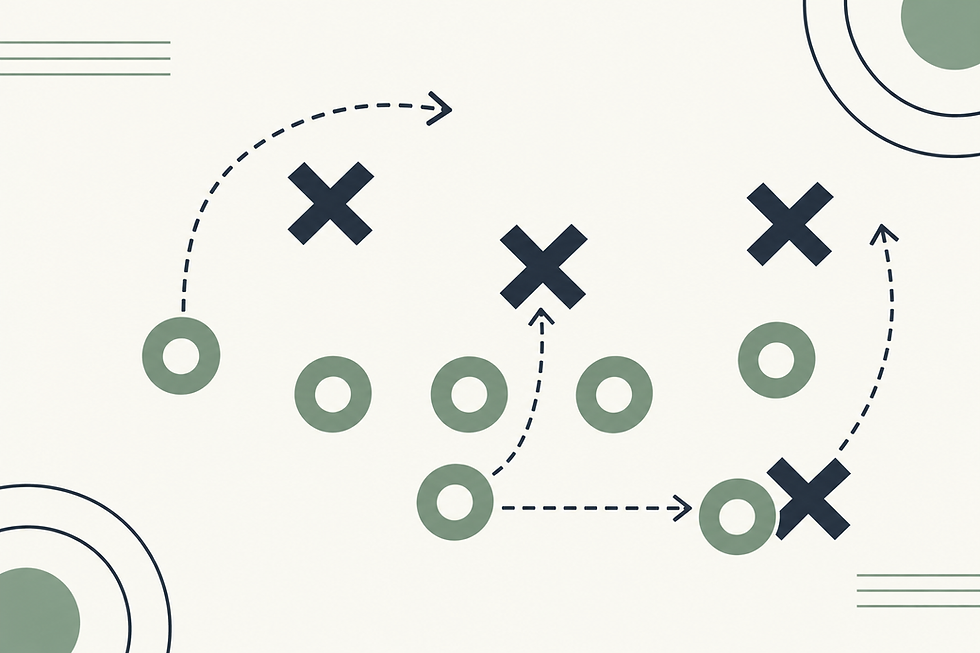
By shifting the constraints and energy elsewhere on the field, the move you wanted all along becomes the path of least resistance.
The Path Forward
Find the Pressure Points: Look away from (and often above) the visible impact area. Identify what structural forces like funding rules, governance gates, decision rights, or reporting requirements are maintaining the current equilibrium.
Embed Capabilities in Consequential Mechanics: Pair every desired practice with an institutional requirement. Make the new habit useful or necessary to navigate a real organizational gate, rather than treating it as an optional "best practice".
Shape the Field of Play: Load the system with counterweights. Change what is talked about most, rewarded, or required so that doing the right thing isn't an act of heroism, it’s just effective navigation.